
Breaking up a marriage brings enough pain already. On top of that, the legal side feels like a maze — especially when people start throwing around words like annulment and divorce. Most people don’t know the huge gap between these two options until they’re already deep into the process.
I’ve spent time studying real cases and talking to people who’ve gone through both. This guide is written in simple language so you can understand what actually happens in each path and which one might suit your situation better.
Divorce – The Most Common Path
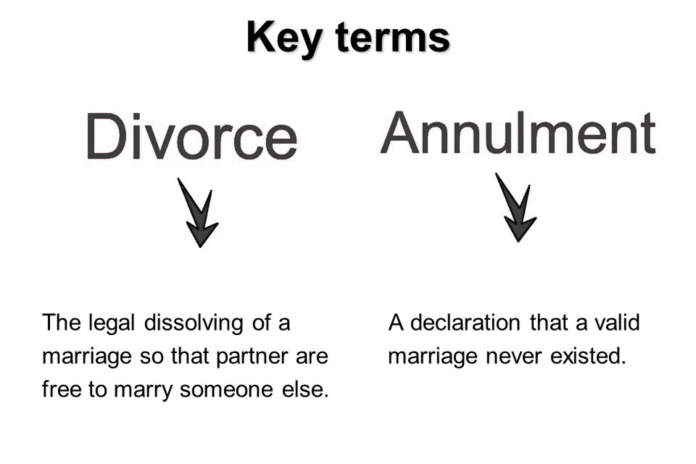
Divorce means the law accepts that a real marriage took place, but now it’s officially over. You were husband and wife, but the relationship didn’t work out. After the court process finishes, both of you return to being single.
This route is available in almost every country and works for both short and long marriages. You don’t always need to prove someone did something wrong — many places now allow “no-fault” divorce, which simply says the marriage has broken down.
Annulment – Declaring the Marriage Never Existed
Annulment is a much stronger legal step. It tells the court that the marriage was never valid from day one. Legally speaking, it’s like the wedding never happened.
Because this is such a big claim, courts don’t give annulments easily. You must show clear proof that something was seriously wrong right at the beginning of the marriage.
Clear Side-by-Side Difference
| Matter | Annulment | Divorce |
|---|---|---|
| What the law says | Marriage was never valid | Marriage was valid but now ended |
| How easy to get | Difficult – needs strong evidence | Much easier in most situations |
| Typical reasons | Fraud, bigamy, force, underage, never consummated | Growing apart, cheating, abuse, incompatibility |
| Money & Property | Often returned to original owners | Court usually divides shared assets |
| Spousal Support | Almost never given | Can be ordered |
| Children | Still legally legitimate | Still legally legitimate |
| Religious View | Usually more accepted | May create problems for remarriage |
| Time Pressure | Often have deadlines | More flexible |
Annulments are only granted in specific serious cases, such as:
- One person was already married to someone else
- One spouse lied about something very important (like health, finances, or past)
- The marriage happened under pressure or force
- One person was not old enough to marry legally
- The couple never lived as husband and wife physically
If your marriage lasted many years and none of these issues exist, annulment is usually not possible.
Real Examples from Everyday Life
- A woman discovers her husband had a secret wife in another city → Good chance for annulment.
- A couple married for 10 years with kids just can’t live together anymore → Only divorce makes sense.
- Someone hid a serious criminal record before marriage → Might qualify for annulment if caught early.
Things That Actually Change Depending on Your Choice
Finances Divorce usually leads to splitting property and possible monthly support. Annulment often returns things to how they were before marriage, so less sharing happens.
Future Plans Some religions only allow a new church wedding after annulment. This matters a lot if faith is important to you.
Emotional Impact Some people feel lighter with annulment because it feels like closing a wrong chapter completely. Others prefer divorce because it feels more honest about the time they spent together.
Mistakes People Often Make
- Thinking annulment is always the cheaper and quicker option (it’s usually not)
- Waiting too long and missing the chance for annulment
- Choosing based only on emotions instead of understanding legal results
- Assuming children will be affected differently (they remain legitimate in both cases)
Useful Advice Before You Move Forward
- Talk to a good family lawyer before deciding anything
- Collect papers and proof early if you’re thinking about annulment
- Consider how each choice will affect your children and money situation
- Think about your religious or family background
- Take time — this decision stays with you for years
Common Questions People Ask
Is annulment better than divorce?
Only if you have strong grounds for it. For most people, divorce is simpler and more realistic.
Does annulment cost less?
Usually no. It can actually cost more because proving the case takes extra work.
Will annulment make my children illegitimate?
No. Children born during the marriage stay legitimate under law.
Can I get annulment after many years of marriage?
It becomes very hard. Most annulments happen in marriages that lasted less than 2–3 years.
Which one allows me to remarry in church?
Many religions accept annulment more easily than divorce.
How long does each process take?
Divorce can be quick if both agree. Annulment often takes longer due to the need for evidence.
Final Thoughts
Annulment and divorce are not the same thing at all. One says the marriage never really existed, while the other says it existed but is now finished.
Your choice should depend on the real facts of your marriage, not just emotions or what sounds better. Take proper legal advice, think about the long-term effects, and choose what gives you the best chance to move forward peacefully.
If you’re going through this right now, I’m really sorry you’re facing it. Feel free to share your general doubts in the comments — I’ll try to give honest direction.
Take care of yourself during this difficult time.